
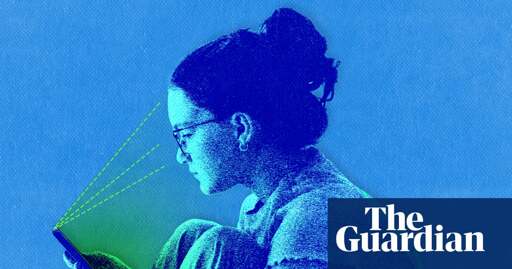
Australia has enacted a world-first ban on social media for users aged under 16, causing millions of children and teenagers to lose access to their accounts.
Facebook, Instagram, Threads, X, YouTube, Snapchat, Reddit, Kick, Twitch and TikTok are expected to have taken steps from Wednesday to remove accounts held by users under 16 years of age in Australia, and prevent those teens from registering new accounts.
Platforms that do not comply risk fines of up to $49.5m.
There have been some teething problems with the ban’s implementation. Guardian Australia has received several reports of those under 16 passing the facial age assurance tests, but the government has flagged it is not expecting the ban will be perfect from day one.
All listed platforms apart from X had confirmed by Tuesday they would comply with the ban. The eSafety commissioner, Julie Inman Grant, said it had recently had a conversation with X about how it would comply, but the company had not communicated its policy to users.
Bluesky, an X alternative, announced on Tuesday it would also ban under-16s, despite eSafety assessing the platform as “low risk” due to its small user base of 50,000 in Australia.
Parents of children affected by the ban shared a spectrum of views on the policy. One parent told the Guardian their 15-year-old daughter was “very distressed” because “all her 14 to 15-year-old friends have been age verified as 18 by Snapchat”. Since she had been identified as under 16, they feared “her friends will keep using Snapchat to talk and organise social events and she will be left out”.
Others said the ban “can’t come quickly enough”. One parent said their daughter was “completely addicted” to social media and the ban “provides us with a support framework to keep her off these platforms”.
“The fact that teenagers occasionally find a way to have a drink doesn’t diminish the value of having a clear, national standard.”
Polling has consistently shown that two-thirds of voters support raising the minimum age for social media to 16. The opposition, including leader Sussan Ley, have recently voiced alarm about the ban, despite waving the legislation through parliament and the former Liberal leader Peter Dutton championing it.
The ban has garnered worldwide attention, with several nations indicating they will adopt a ban of their own, including Malaysia, Denmark and Norway. The European Union passed a resolution to adopt similar restrictions, while a spokesperson for the British government told Reuters it was “closely monitoring Australia’s approach to age restrictions”.
Wall of text incoming.
I don’t see how both these claims can simultaneously be true. Either Australia has tools to hold these companies to account, in which case, how would they have previously failed if they’d already tried? Or it doesn’t, and this is just one more completely futile policy that won’t give companies any more than the usual slap on the wrist if it ever goes to court.
I argue that they didn’t try, because they never actually cared about children’s wellbeing, because if they did they’d have done better than this, ergo this policy isn’t really about that and is actually about making citizens more easily identifiable online.
Additionally, it does nothing to reduce the power of seppo tech giants. On the contrary, they’ve got money, they’ll be fine. Independent social media sites however, don’t all have the resources to implement verification systems, so some will feel the financial burden of compliance a lot harder, and others will simply cease serving Australian users, further strengthening Silicon Valley’s hold over the internet.
As I have said over and over again in this thread, what the ban will do is cut children suffering domestic abuse (a problem that is absolutely rife in this country) off from their support networks. It’ll cut minority kids that’re subjected to bullying by their peers off from their communities. It’ll drive more kids to shadier corners of the internet where they’re at greater risk of predation. I’m not being hyperbolic when I say this is going to get children killed.
Furthermore—and again, as I’ve been repeating all over this thread—everyone—yes, that includes adults—will be required to submit personally identifiable information to private organisations just to communicate with other people online, making anyone in this country who uses social media a potential victim of identity theft the moment a data breach happens. And happen it will. It’s happened before, and it’ll happen again.
What’s more, knowing that the platforms they’re using have their identities will make a great many people more hesitant to speak critically about existing power structures, especially the government. This is bad.
I stand by my previously stated opinion that all this is worse than the status quo, but even if it weren’t you should be asking why this is the solution that the government came up with.
Sorry, my poor communications…I was referring to the social media companies, when I said they had been trying and failing for years. Not trying that hard mind you; moderation is a very expensive problem to solve, and they don’t want to spend money they don’t explicitly have to.
Maybe. That is speculation, probably a nice little side effect. But not the primary goal.
This is a great point; and there is an easy way to solve this problem. Not that the govt will care that a simple solution exists. If you don’t have an algorithmic feed a lot of the spread of misinformation is curtailed. If you are not allowed to host images/video etc directly than the moderation of them can be off loaded to 3rd parties.
Another great point. I don’t have a good answer to this one, but there are anonymous leak avenues etc for serious stuff.